dollar tree compass

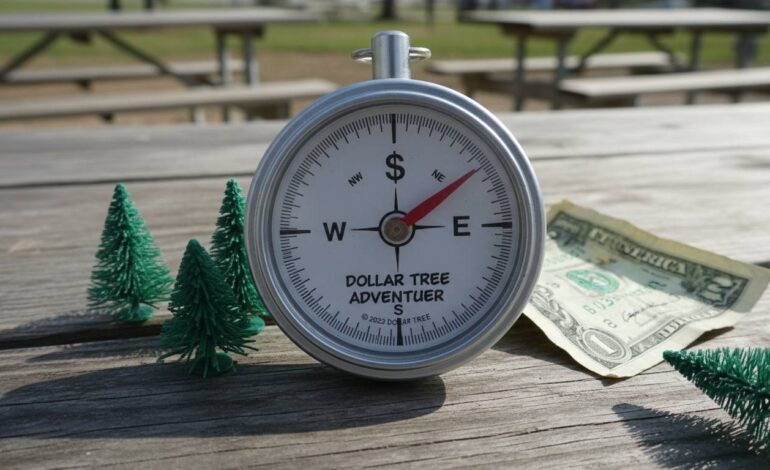
If you’re looking for an affordable compass, Dollar Tree offers basic models that work for simple navigation needs, educational purposes, and outdoor activities. These budget-friendly compasses typically cost just $1, making them accessible for anyone who needs a basic directional tool without spending much. While they may not match the precision of professional-grade compasses, Dollar Tree compasses serve well for beginners, students, and casual users who need a reliable way to find cardinal directions.
This guide explores everything you need to know about buying a compass at Dollar Tree, including what types are available, their quality and accuracy, best use cases, and tips for getting the most value from your purchase.
Understanding Compasses Available at Dollar Tree
Dollar Tree, known for selling everything at the $1 price point, carries a limited but functional selection of compasses. These are typically simple, analog models designed for basic directional navigation rather than professional or wilderness use.
The compasses found at Dollar Tree are usually baseplate compasses—the most common type for recreational navigation. They feature a clear base with a rotating bezel marked with cardinal and intercardinal directions, a magnetic needle that points toward magnetic north, and a housing filled with liquid to help stabilize the needle.
Most models sold at Dollar Tree are manufactured in China and are designed for light use. They often come with small lanyards or clips for easy carrying, and some include basic instruction cards explaining how to use them for orientation.
Types of Compasses You Might Find
While inventory varies by location, Dollar Tree typically offers a few different styles:
Basic Baseplate Compasses are the most common. These rectangular compasses feature a transparent base that allows you to see a map underneath while taking readings. They include a rotating bezel with degree markings, a direction-of-travel arrow, and a magnetic needle housing.
Button or Pocket Compasses are smaller, round models that fit easily in pockets or bags. These are simpler in design, often lacking the detailed markings of baseplate models but still functional for basic direction-finding.
Compass Keychains combine functionality with portability. These attach to keys or bags and serve as emergency navigation tools. They’re particularly popular among parents buying compasses for children’s outdoor education.
Magnifying Compass Models occasionally appear at Dollar Tree. These feature a small magnifying lens integrated into the housing, useful for reading fine map details while navigating.
Quality and Accuracy: What to Expect
Let’s be honest—a $1 compass won’t rival a $50 professional model from brands like Suunto or Silva. However, Dollar Tree compasses are functional for their intended purpose: helping users find general directions.
The magnetic needles in budget compasses are serviceable but not calibrated to the same standards as expensive models. You may notice some deviation, particularly if the compass has been exposed to magnets, metal objects, or extreme temperatures. Most users report their Dollar Tree compasses are accurate within 5 to 15 degrees of true north, which is perfectly adequate for casual navigation and educational use.
The liquid inside the compass housing can degrade over time, especially if the compass experiences temperature extremes or physical shock. You’ll know this has happened when the needle starts wobbling excessively instead of settling quickly toward north. For this reason, it’s smart to buy a new compass rather than relying on one you’ve stored for years.
The build quality is plastic-heavy, which keeps costs low but means these compasses aren’t built for rugged outdoor abuse. They’ll survive being dropped occasionally, but repeated impacts can damage the internal mechanism or crack the housing.
Comparing Dollar Tree Compasses to Other Options
If you’re considering alternatives, here’s a quick comparison:
Dollar Tree ($1): Basic functionality, limited features, suitable for beginners and casual use. No warranty or guarantee of precision.
Sporting Goods Stores ($10-25): Significantly better build quality, more accurate needles, additional features like sighting mirrors, global needles for international use, and inclinometers for measuring slope.
Professional Models ($40-150+): Highest precision, durable construction, lifetime warranties, advanced features for wilderness navigation, surveying, and geological work.
For most people who just need to confirm which direction is north, a Dollar Tree compass works perfectly fine. If you’re planning serious hiking, backcountry travel, or need reliable navigation in unfamiliar territory, investing in a quality model makes more sense.
Best Uses for Dollar Tree Compasses
Despite their budget price tag, Dollar Tree compasses serve several practical purposes:
Educational Tools make excellent sense for schools, scout groups, and outdoor education programs. Teachers can distribute them to students without worrying about loss or damage, and they’re perfect for teaching basic navigation concepts. Kids learn hands-on how to read cardinal directions, orient a map, and understand the difference between magnetic and true north.
Beginner Outdoor Enthusiasts benefit from starting with an affordable compass before investing in expensive gear. You can practice taking bearings, orienting yourself, and navigating familiar areas without the pressure of handling expensive equipment.
Emergency Backup is another solid use case. Keeping a small compass in your car, backpack, or emergency kit provides a no-battery directional tool if technology fails or you find yourself lost with a dead GPS.
Geocaching and Casual Games where directional tools add fun don’t require precision beyond what budget compasses provide. If you’re introducing friends to navigation games or treasure hunts, Dollar Tree compasses get the job done economically.
Artistic and Decorative Purposes sometimes call for functional compasses. Some crafters incorporate small compasses into projects, and they’re popular in survival-themed games and displays.
How to Use Your Dollar Tree Compass Effectively
Getting the most from your budget compass requires understanding its limitations and following proper technique:
Hold the compass flat in your palm, keeping it level to allow the needle to move freely. Tilt it too sharply, and the needle might drag against the housing and give false readings.
Stay away from metal objects when taking readings. Cars, fences, watches, phones, and even belt buckles can interfere with the magnetic needle. Step away from metal structures before trusting your reading.
Wait for the needle to settle before recording your bearing. In budget compasses, the liquid damping may be less effective than in expensive models, so give the needle a few seconds to stabilize.
Use the orienting arrow by rotating the bezel until the arrow aligns with the magnetic needle. This corrects for declination (the difference between magnetic and true north) roughly, giving you a more accurate reading than just looking at where the needle points.
Practice in familiar areas first. Use your compass to confirm directions you already know—where the sun rises and sets, which way your street runs—until you trust your instrument’s readings.
When to Upgrade Your Compass
Certain situations call for moving beyond budget compasses:
If you’re planning backcountry hiking or camping, especially in unfamiliar wilderness areas, a quality compass becomes essential equipment. The stakes are too high for unreliable instruments.
When you need precise bearings for land navigation, triangulation, or map work, the small inaccuracies in budget compasses compound into significant errors over distance.
For professional or career applications like surveying, geology, forestry, or military work, professional-grade instruments are non-negotiable requirements.
If you’re experiencing consistent accuracy problems—your compass always seems off by a significant amount despite proper technique—upgrading may help, though recalibrating or replacing a faulty compass might solve the problem.
Maintaining Your Compass
Taking care of your compass extends its useful life:
Store it flat to prevent the liquid from shifting or developing air bubbles. A compass case or soft pouch offers good protection.
Avoid temperature extremes. Don’t leave your compass in a hot car or expose it to freezing conditions for extended periods—the liquid can expand or contract, affecting performance.
Keep it away from magnets. Magnetic clasps, refrigerator magnets, and speaker magnets can accidentally magnetize the needle, causing it to lose accuracy.
Check periodically for signs of damage: cracks in the housing, bubbles in the liquid, or a needle that doesn’t settle properly.
The Value Proposition: Is a Dollar Tree Compass Worth It?
For many people, the answer is a clear yes. At $1, you get a functional tool that accomplishes basic navigation tasks without financial risk. You won’t feel bad about losing it, breaking it, or leaving it in a drawer for years between uses.
The key is matching expectations to reality. A Dollar Tree compass won’t help you navigate through trackless wilderness or provide survey-grade precision. But it will reliably point you toward north, help you orient a map, and teach you fundamental navigation skills.
Many outdoor enthusiasts keep a budget compass as a backup while carrying professional gear for primary navigation. Others use them for specific situations where losing an expensive compass would be devastating—like lending one to a child on a nature walk.
Consider what you need from a compass. If it’s simple direction-finding, educational use, or a backup tool, Dollar Tree compasses deliver solid value. If your navigation needs are serious or professional, budget for something more robust.
Conclusion
Dollar Tree compasses offer an affordable entry point into basic navigation for anyone needing a simple directional tool. These $1 instruments work well for beginners, students, educators, and casual users who don’t require professional-grade precision. While they lack the durability and accuracy of expensive models, they accomplish fundamental compass tasks effectively.
The key to getting value from a Dollar Tree compass is understanding its limitations: expect some accuracy variance, handle it carefully, and recognize when more serious navigation demands call for better equipment. For everything else—from teaching kids about directions to keeping an emergency backup—a budget compass from Dollar Tree serves perfectly well.
The next time you’re browsing Dollar Tree, grab one of these small compasses and keep it somewhere useful. You might be surprised how often a simple directional tool comes in handy.
FAQs
Are Dollar Tree compasses accurate enough for hiking?
Dollar Tree compasses are generally accurate within 5-15 degrees of true north, which works for casual use but isn’t precise enough for wilderness navigation. For hiking in unfamiliar areas, invest in a quality compass from a sporting goods store.
How long do Dollar Tree compasses last?
With proper care—avoiding extreme temperatures, physical impacts, and magnetic interference—a Dollar Tree compass can last several years. The liquid filling may degrade over time, eventually causing the needle to wobble.
Can I use a Dollar Tree compass for geocaching?
Yes, for basic geocaching and treasure hunts, a Dollar Tree compass provides sufficient accuracy. However, if you’re serious about the hobby, a quality compass offers better precision and durability.
Do Dollar Tree compasses work internationally?
Most basic compasses are designed for use in North America and may not perform accurately in other regions due to magnetic declination differences. For international travel, look for a global compass designed for worldwide use.
What’s the difference between a Dollar Tree compass and an expensive one?
Expensive compasses feature better build quality, more accurate magnetic needles, additional features (sighting mirrors, inclinometers), global needles for worldwide use, and lifetime warranties. Budget compasses are simpler but still functional for basic needs.
Can I calibrate a Dollar Tree compass?
Basic calibration is possible by demagnetizing or remagnetizing the needle, but it’s complex and often not worth the effort given the low cost. If your compass seems consistently inaccurate, replacing it is usually the better option.