Kin no Tamamushi: Discover the Allure of Japanese Craftsmanship

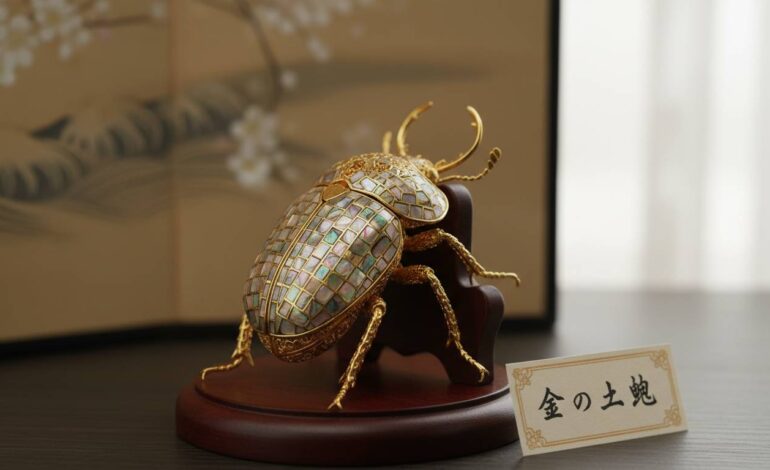
Kin no Tamamushi, or “golden jewel beetle,” is a phrase that immediately evokes a sense of shimmering beauty and cultural depth. While not a widely recognized standalone term, it draws from the rich tradition of tamamushi lacquerware, a uniquely Japanese craft known for its iridescent finish, as well as symbolic echoes from historical artifacts and language usage in Japanese culture.
Imagine a surface that seems to shift colors depending on how the light catches it—that’s the essence of tamamushi lacquerware. And when you add the element of “gold” (kin), it elevates that imagery into something even rarer and more radiant.
What Is Tamamushi Lacquerware?
Tamamushi lacquerware originated in Sendai, Miyagi Prefecture. It was developed around 1932 by the National Tohoku Craftworks Institute and later patented in 1935. The technique involves layering translucent lacquer over a base layer of silver powder. This creates a lustrous surface that seems to glow with shifting hues—much like the iridescent wings of the jewel beetle it’s named after.
Designs are often finished using maki-e, a method where gold or metallic powder is sprinkled onto motifs such as phoenixes or floral patterns. The result is pieces that look both luminous and elegant.
Beyond tradition, the craft has evolved. Tohoku Kogei—the primary producer of tamamushi lacquerware—constantly innovates, creating practical everyday items like pens, picture frames, bowls, and even wine glasses. Their resilience and creativity were especially notable following the 2011 Great East Japan Earthquake, when they introduced fresh product lines like a deep indigo lacquer and glassware versions of their finish.
Cultural Reverence and Prestigious Recognition
Tamamushi lacquerware earned the status of a Traditional Craft of Miyagi in 1985, despite being relatively recent compared to many centuries-old crafts. Its distinct finish has even been used for diplomatic and cultural exchange. In 2025, a commemorative “Golden Kannon Card” featuring tamamushi lacquerwork was presented by the National Palace Museum in Taiwan to mark its 100th anniversary, demonstrating the art form’s cross-cultural prestige.
The Symbolism of “Kin” and Tamamushi
While “kin no tamamushi” doesn’t denote an established craft, the combination of “gold” with the “jewel beetle” metaphor enriches the imagery. The tamamushi beetle itself, Chrysochroa fulgidissima, is native to Japan and Korea, known for its dazzling, color-shifting wings.
The phrase “tamamushi-iro” (tamamushi color) has entered Japanese vernacular to describe language or statements that are ambiguous or multifaceted—holding multiple interpretations, much like the iridescent insect. Insert “golden” into that context, and you evoke qualities of rarity, quiet elegance, and shifting subtlety—imagery rich in depth and metaphor.
Where Kin no Tamamushi Meets Popular Culture
Interestingly, the phrase made a recent appearance in fan discussions and online interpretation, especially in the context of Demon Slayer (“Kimetsu no Yaiba”). Fans speculated about symbolic connections between the phrase “kin no tamamushi” and character motifs, such as Giyu Tomioka’s calm and refined persona, layered with quiet emotional complexity. While these interpretations are speculative, they reflect the power of the phrase as a metaphorical device in storytelling.
Summary of Key Insights
- Tamamushi lacquerware originated in 1930s Sendai and is celebrated for its iridescent shine.
- It gained recognition as a traditional Miyagi craft in 1985 and continues to evolve.
- The term “tamamushi-iro” denotes ambiguity and nuance; adding “kin” (gold) enriches the symbolic imagery.
- Modern interpretations link “kin no tamamushi” to themes of subtle strength, value, and layered identity—such as in anime fandom.
- The craft remains both a cultural treasure and a living, adaptable art form.
Final Thoughts
Though “Kin no Tamamushi” isn’t a standalone craft, the phrase encapsulates something special: a fusion of traditional artistry with metaphorical richness. It draws from the luminous beauty of beetle-wing lacquer, the elegance of gold, and the layered ambiguity of language itself. As both a visual and symbolic motif, it exemplifies the grace, depth, and ever-shifting wonder that define Japanese craftsmanship.
In appreciating “kin no tamamushi,” we glimpse a convergence of art, culture, and meaning—one that invites deeper looking and quiet admiration.