Cellular Respiration Equation: Reactants, Products, and Formula Explained

Cellular Respiration Equation: Reactants, Products, and Formula Explained
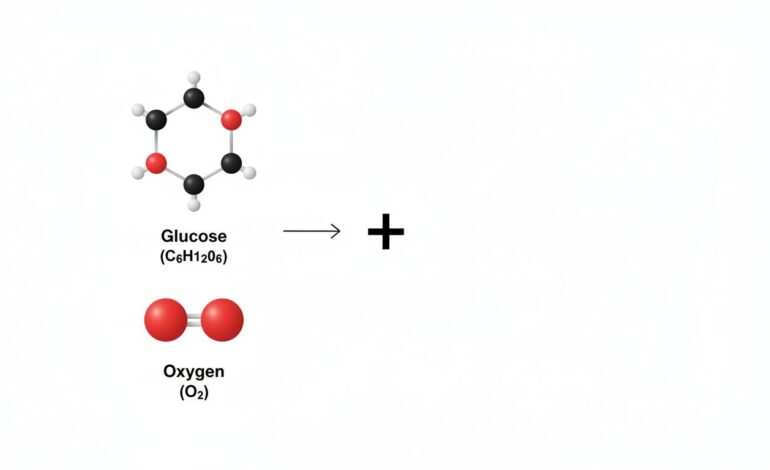
Cellular respiration is the process by which cells convert nutrients into usable energy, primarily in the form of ATP, using oxygen. The overall chemical equation is:
C₆H₁₂O₆ + 6 O₂ → 6 CO₂ + 6 H₂O + energy (ATP).
This means one glucose molecule plus six oxygen molecules produce six carbon dioxide molecules, six water molecules, and energy. Simple, right? Let’s break it down further.
Why This Equation Matters
Most living organisms—from humans to microbes—need energy to function, and they get it by breaking down glucose with oxygen. Cellular respiration’s formula isn’t just academic; it’s the blueprint for understanding how energy flows in ecosystems. In harvest seasons or ocean plankton blooms, this reaction fuels growth on a massive scale, even though the equation stays the same.
The Players: Reactants and What They Do
Glucose: The Fuel
Glucose (C₆H₁₂O₆) is the breakdown product of carbs. It enters your cells, gets broken down, and offers electrons for energy generation.
Oxygen: The Final Electron Acceptor
Oxygen molecules (O₂) are essential partners. Without them, the electron transport chain can’t finish, and energy production stalls.
You see, in aerobic respiration, oxygen takes electrons at the end of the chain. That’s what lets the whole system keep moving and your body keep functioning.
What’s Made: The Products
Carbon Dioxide (CO₂)
You exhale this byproduct—carbon dioxide comes from glucose oxidation. Cells unload it, your lungs expel it.
Water (H₂O)
It forms when oxygen accepts electrons and hydrogen at the end of the transport chain. It’s a sign the energy-generating process finished cleanly.
ATP: Energy Currency
A fraction of this reaction’s energy is captured in ATP molecules. Each glucose yields roughly 30–32 ATP, though current science suggests that might be more like 29–30. Still, enough for muscle contraction, thinking, and yep—keeping your heart beating.
The Big Picture: Step-by-Step Journey
The equation looks simple—but the real action’s in the details.
1. Glycolysis (in the cytoplasm)
Glucose breaks into two pyruvate molecules. You get a net gain of 2 ATP and some NADH.
2. Pyruvate Conversion
Each pyruvate becomes Acetyl-CoA. You release CO₂ and make NADH.
3. Citric Acid Cycle (Krebs Cycle)
Acetyl-CoA enters the cycle, yielding more ATP, NADH, FADH₂, and CO₂.
4. Electron Transport & Oxidative Phosphorylation
NADH and FADH₂ drop off electrons. Those move through chain, pumping protons, and producing maybe 26–28 ATP from that gradient.
Put together, it matches the overall, simplified equation, but now with clarity on the inner workings.
Why Variations Exist
Not every cell always makes 30 ATP per glucose. Factors like mitochondrial efficiency, leaks in the chain, or differences in ATP synthase performance make the real number a bit flexible. Also, certain uncoupling proteins let some energy escape as heat— useful in brown fat or when you shiver.
Quick Real-World Example
Think about a marathon runner. During sustained effort, you rely on aerobic respiration—breathing in oxygen, burning glucose (and fats later), producing CO₂ you exhale, and water (which helps regulate temperature). The simplified equation sums that crucial energy exchange.
Expert Insight
“Understanding the cellular respiration equation is key to grasping how life relentlessly turns fuel into energy. That one-line formula captures a world of biochemical choreography.”
— Dr. Lee Martinez, Biochemistry Professor
This makes the reaction not just a formula, but a story of how energy circulates in life.
Common Confusions, Clarified
- Aerobic vs anaerobic: Without oxygen, cells switch to anaerobic respiration (like lactic acid buildup). That’s incomplete, yields less ATP, and doesn’t follow the clean equation above.
- Different ATP yield estimates: Some sources say 36–38 ATP. That’s older data. Current findings suggest 30–32 is more accurate, because of variable mitochondrial leaks and gradients.
- Why water appears both as reactant and product in some contexts: In the full pathway, water’s used in steps and then generated elsewhere. But in the net reaction, only water generation is shown.
Key Takeaways
- The formula C₆H₁₂O₆ + 6 O₂ → 6 CO₂ + 6 H₂O + energy (ATP) directly shows how energy’s made from glucose.
- The crux lies in the intermediate stages: glycolysis, the Krebs cycle, and the electron transport chain.
- ATP yield isn’t static—depends on cellular context, efficiency, and bioenergetic nuances.
FAQs
How many ATP molecules does one glucose molecule produce?
Around 30–32 ATP molecules in aerobic respiration. Past figures like 36–38 are less accurate due to mitochondrial efficiency and proton leak.
What’s the difference between aerobic and anaerobic respiration?
Aerobic needs oxygen and yields much more ATP through the full breakdown of glucose. Anaerobic skips the oxygen-dependent steps, produces less energy, and creates byproducts like lactic acid.
Why is oxygen needed in this process?
Oxygen acts as the final electron acceptor in the electron transport chain. Without it, the chain backs up, and ATP production halts.
Does the equation change in plants?
Plants follow the same equation for cellular respiration. Even though they produce oxygen in photosynthesis, when it comes to respiration, glucose and oxygen convert to CO₂, water, and energy the same way.
Final Word
That’s the cellular respiration equation demystified. Every breath, every beating heart or galloping hoof, echoes that same chemical dance—turning fuel into the energy of life.