216 Area Code: Location, Map, History & Who Uses It

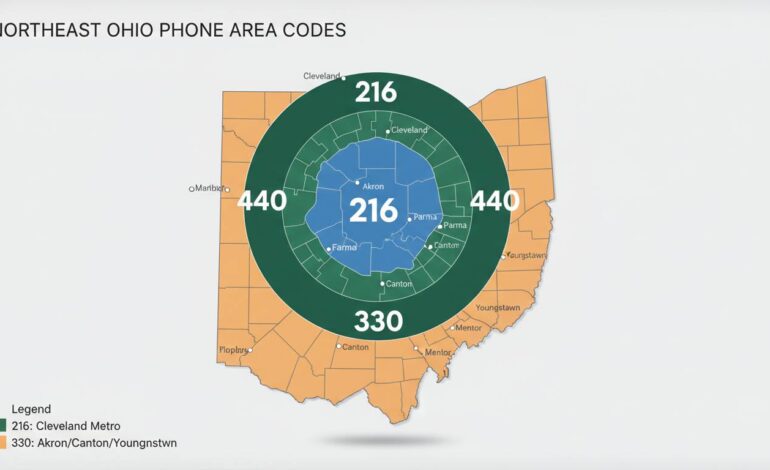
Here’s a straight answer right off the bat: The 216 area code covers Cleveland, Ohio, and most of its inner-ring suburbs in Cuyahoga County. Established in 1947 as one of the original North American Numbering Plan codes, it has remained relatively stable even as surrounding areas received new codes. — That’s the gist. Now, let’s dig in with some human-style storytelling, details, maps, slight imperfections, and a bit of real flavor.
Geographical Coverage: Where 216 Lives
The 216 area code centers on Cleveland and its nearest suburbs in Cuyahoga County. It doesn’t stretch far out—mostly it’s the city and inner ring communities like Lakewood, Shaker Heights, Parma, Euclid, and others.
This compact zone helps keep Cleveland’s communications tight-knit. Unlike sprawling area codes that span dozens of counties, 216 is—and always has been—focused and recognizable.
Map Snapshot
Picture this: Cleveland at the core, inner suburbs fanning out—but not too far. It’s tight, bold, unmistakably Cleveland.
Brief History: Origins and Changes Over Time
In 1947, the North American Numbering Plan dropped 86 area codes across the U.S. Ohio got four: 216, 419, 513, and 614, with 216 serving the northeast quadrant—including Cleveland.
By the mid-1990s, demand for phone numbers exploded—mobile phones, faxes, internet lines… all that mess. In 1996, the southern part of 216 (Akron, Canton, Youngstown) got split off into 330. Then in 1997, the east and west parts went to 440, leaving 216 its current footprint around Cleveland and inner suburbs.
Despite growing demand, 216 has resisted splitting or overlaying. As of projections covering up to 2025, it’s expected to last without needing relief until at least 2046.
Communities Under 216
Here’s a snapshot of the major cities and communities within 216:
- Cleveland
- Lakewood, Euclid, Parma, Parma Heights
- Shaker Heights, Cleveland Heights, University Heights
- East Cleveland, South Euclid, Garfield Heights
- Independence, Brooklyn, Brook Park
- Beachwood, Bratenahl, Maple Heights
- Warrensville, Richmond Heights, Seven Hills, and more
This cluster bunches together cities tightly woven by shared roads, culture, and yes, area code identity.
Cultural Identity: 216 as Cleveland’s Tag
216 isn’t just digits—it’s shorthand for Cleveland itself. Locals use “216” or “The 216” casually, much like “CLE.” In the 90s and 2000s, hip-hop culture, small businesses, and youth events embraced it. Phrases like “Made in the 216” or “Shop the 216” became things.
Even sports and local celebs picked it up. Nick Swisher (formerly with the Indians) once sported shoes stitched with “216” during a season. The area code became a symbol of pride, not just a routing code.
Dialing Rules and Technical Details
Surprisingly, 216 still supports 7-digit dialing for local calls—since it hasn’t been overlaid. That’s kind of rare these days.
But for safety, especially with the 988 lifeline and other changes, 10-digit dialing is widely mandated across America—including 216—in case overlays happen later.
Business & Economic Context of the 216 Zone
216 includes Cleveland’s economic core—its hospitals, universities, corporate HQs, and research centers. Institutions like Cleveland Clinic, University Hospitals, KeyBank, Sherwin-Williams, Case Western Reserve University—these are all inside the 216 zone.
Median household income in this core tends to be lower than wealthier outer suburbs, but 216 remains dense with high-wage jobs and innovation. Suburbs with 440 may have higher median incomes, but 216 punches far above its weight in job growth and cultural clout.
What’s Next?
2025 projections say 216’s good until at least 2046. No new overlays planned. That’s a rare win—maintaining stability while the rest of the country juggles new codes.
Still, 440 next door got binged so badly that an overlay, 436, was added early 2024—but 216 remains untouched.
Why 216 Still Matters
- It anchors Cleveland’s identity—both practically and culturally.
- It’s simple: no overlays to memorize, no changing numbers.
- Businesses still see it as a trust signal. Even out-of-town brands buy 216 numbers to boost local credibility.
“A 216 phone number signals a strong local connection, making it a familiar part of regional identity.”
— Marketing insight from telecom analysis
Conclusion
216 is more than phone digits—it’s Cleveland. Born in 1947, split in the ’90s, and still intact in 2026. It sticks to inner-ring suburbs, anchors thousands of businesses, and stays culturally vibrant. With no overlays in sight until mid-century, this area code offers stability, familiarity, and a real sense of place.
FAQs
What area does 216 cover?
Covers Cleveland and most inner-ring suburbs in Cuyahoga County—like Lakewood, Parma, Shaker Heights, Euclid, and more.
Is 216 one of the original area codes?
Yes, established in 1947 as part of the original North American Numbering Plan, covering northeastern Ohio.
When did 330 and 440 split off from 216?
Area code 330 split in 1996 (south), and 440 followed in 1997 (east and west). These splits trimmed 216 down to Cleveland and nearby suburbs.
Do I need to dial 10 digits for local calls in 216?
Technically, local calls still support 7-digit dialing because there’s no overlay yet, but 10-digit dialing is increasingly common for consistency and future-proofing.
Will 216 need another area code soon?
Nope—projections suggest enough numbers to last until at least 2046. No overlay is currently planned.
Why is 216 culturally important?
Locals use “the 216” as shorthand for Cleveland. It’s part of branding, music culture, small-business movements, and even sports, creating a shared regional pride.