How Many Calories in a Banana? Banana Nutrition Facts Explained

How Many Calories in a Banana? Quick Answer
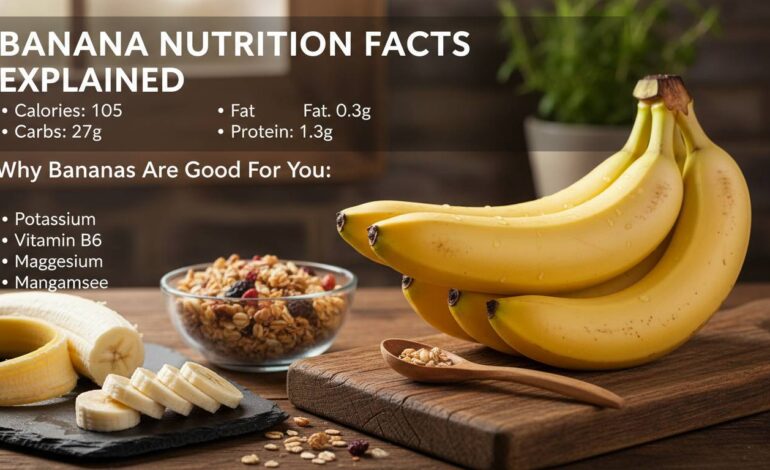
A standard medium banana—around 7 to 8 inches long—contains roughly 105 calories. That’s the straight-up answer, no fluff. The numbers shift a bit depending on size: small bananas hover near 90 calories, big ones can reach 120–135.
Why This Number Matters for You
Knowing how many calories you’re getting from a banana lets you fit it smoothly into a balanced meal plan. Bananas are a go-to snack for athletes, busy folks, and parents alike—so nailing the calorie count means you can pair it with other protein, fat, or fiber without guessing.
If you’re watching your daily intake, even a 15–20 calorie swing can affect your totals over time. And yes, it matters whether you slice it into morning oatmeal or toss it into a smoothie.
Banana Sizes and How They Change the Calorie Count
Bananas come in different sizes—and the calorie count follows that scale pretty closely.
- Small (6 inches) – around 90 calories
- Medium (7 inches) – about 105 calories
- Large (8 inches) – about 120 calories
- Extra-large (9+ inches) – 135 calories or more
Think of it like this: going from a medium to a large banana adds roughly 15 calories. It’s not huge, but if you’re eating multiple fruits or counting carefully, those numbers add up.
On a tight calorie budget, size matters—just weighing your food or eyeballing it can save those sneaky extra 30 calories.
Nutrition Deeper Dive: Not Just Calories
Beyond calories, bananas are a solid whole-food choice packed with nutrients:
- Carbs & Fiber – A medium banana carries about 27 grams of carbs and nearly 3 grams of fiber. That fiber helps slow sugar absorption and keeps you satisfied longer.
- Potassium – You get around 422 mg of potassium in a medium banana. It’s vital for muscle function and heart health.
- Vitamins – Especially vitamin B6 (about 0.5 mg) and a bit of vitamin C.
- Natural Sugars – Expect around 14 grams—mostly glucose, fructose, and sucrose, not added calories.
Side note: folks on low-carb diets often shy away, but for most, a banana serves as smart fuel—not sugar overload.
Real-World Scenarios: When Banana Calories Matter
A jittery morning commute, a child’s packed lunch, or a pre-gym snack—context changes how bananas fit into your day.
Athlete Boost
Runners and cyclists love bananas. For a mid-run pick-me-up, a banana delivers quick energy and potassium to help stave off cramps. Even though it adds about 100 calories, the revival can justify the number.
Kid’s Lunchbox
That banana is not just a sweet treat—it’s a fiber, vitamin, and energy source. More than just calories, you’re slipping in nutrition without added sugar.
Smoothie or Oatmeal
Tossing in a medium banana bumps up calories—say from 150 to 255 when added to oatmeal. That’s solid energy—but if you’re watching macros, maybe halve it or pick a smaller fruit.
Bananas in Your Daily Meal Pattern
What happens when you eat bananas multiple times a day or mix them into meals?
- Breakfast – One medium banana and your oatmeal comes in around 250 calories. Toss in peanut butter or yogurt? You’re easily at 350+ calories.
- Snack Time – Pairing a small banana (90 cal) with a handful of nuts (around 170 cal) makes for a satisfying ~260-cal power-up.
- Post-Workout Refuel – Banana plus whey shake might land you at 300–400 calories total—efficient and nourishing.
The bottom line: remember these are estimates. Measuring keeps you on track. Eyeballing might mean small deviations—but if you’re consistent, you’re still in the ballpark.
Why Banana Calories Are So Stable
Bananas’ calorie count doesn’t jump around wildly like processed snacks do. There’s a simple reason: whole fresh foods don’t hide sugars or fats under layers of additives. A medium banana is predictable: organic, conventional, yellow, or slightly green.
Here’s the catch: as bananas ripen, their carbs convert from starch to sugar. But total calorie-wise, it stays about the same. You’re not adding energy—just making it taste sweeter.
So when you’re counting, you don’t need to nag between ripe-green or fully yellow. The weight differences tend to balance out sugar vs. starch, leaving calories roughly consistent.
Comparison: Banana vs. Other Fruits
It helps to see bananas next to similar fruits:
| Fruit | Approx. Calories (Medium) | Notes |
|——————|—————————-|————————————-|
| Banana | ~105 | Balanced mix of carbs, fiber, nutrients |
| Apple (medium) | ~95 | More fiber, less potassium |
| Orange (medium) | ~62 | Lower calories, higher vitamin C |
| Pear (medium) | ~100 | Slightly more fiber than banana |
Makes you appreciate bananas as a mid-range, nutrient-dense option—more than sweet, less than some heavier desserts.
How to Make Bananas Work in Your Diet
Practical tips to integrate bananas without messing up your balance:
- Smaller Size, Same Benefits – Go for a small banana if you want fewer calories but still get fiber and nutrition.
- Pair with Protein/Fat – Try half banana on whole-grain toast with peanut butter. Keeps sugar stable, adds satisfaction.
- Measure in Recipes – Slicing for smoothies? Use a food scale to stay consistent with your target calories.
- Spread the Ripeness – Slightly green bananas have a lower glycemic response, but flavor might suffer. Riper is sweeter, same calories; choose based on how it fits your meal plan.
Expert Insight
“A medium banana’s calorie count is remarkably stable across ripeness levels because the sugar transformations don’t affect energy content. Its reliability makes it a go-to for balanced snacking.” – Nutritionist Dr. Isabelle Greenfield.
That quote nails it—a single banana gives consistent energy, reliable nutrition, and is easy to use in planning.
Summary: Banana Calories at a Glance
A medium banana—about 7–8 inches long—contains roughly 105 calories. Smaller or larger fruit shifts that by just a few dozen calories. Most of the energy comes from carbs, mostly natural sugars and a little fiber. You’re also getting notable potassium, some B6, and a dash of vitamin C. Ripe or less ripe—it’s still around the same calories. Smart pairing (protein or fat) helps stabilize blood sugar. The banana’s predictability is what makes it so helpful in real-world meal planning.
FAQs
How many calories are in a small banana?
A small banana around 6 inches long has approximately 90 calories. It’s a handy swap if you want to shave off a bit without losing much nutrition.
Does ripeness change a banana’s calories?
Nope—ripeness doesn’t change the calorie count. As bananas ripen, starch turns into sugar, but total energy stays about the same.
Can I eat banana if I’m on a low-calorie diet?
Definitely. The key is controlling portion size or substituting a small banana instead of a medium—giving you flavor and nourishment with slightly lower calories.
Is a banana a good pre-workout snack?
Yes. A banana offers roughly 100 calories of quick-digesting carbs and potassium. It’s light but energizing for exercise.
Can I use bananas in recipes without adding unwanted calories?
Sure! But if recipe calls for whole bananas, keep portion and size in mind. You can use half a banana, or small size, to stay aligned with your calorie goal.
Are bananas better than other fruits calorie‑wise?
They’re mid-range—less than calorie-dense fruits like grapes or mangoes, but a bit more than citrus like oranges. Nutritionally balanced, making them an easy choice.
That’s the full and structured rundown of banana calories, with context, real‑world use, and simple clarity.