480 Area Code: Location, Map, Cities, and Phone Numbers

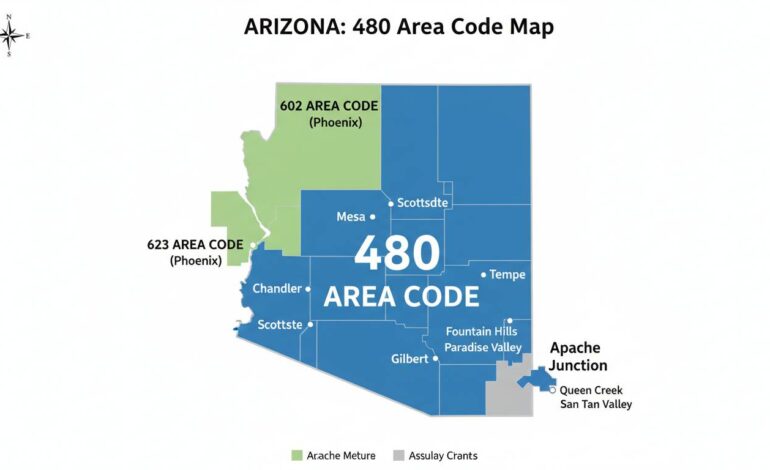
The 480 area code serves the eastern and northeastern parts of metropolitan Phoenix, Arizona—including cities like Mesa, Chandler, Gilbert, Tempe, Scottsdale, and their suburbs. It’s one of the three key area codes in the Phoenix region, alongside 602 and 623.
What Is the 480 Area Code and Why Does It Matter?
The 480 area code is part of an overlay system designed to handle growing phone usage in the Phoenix metro area. As Phoenix expanded, demand for new numbers rose sharply. To keep up, Arizona launched the 480 code in 1999 to relieve pressure on existing codes, especially the older 602. Because it overlays the same area rather than splitting, dialing requires ten digits even for local calls.
Overlays like this are common in growing regions. Phoenix’s 480 region keeps growth manageable while allowing existing numbers to stay intact. It’s a practical solution that helps customers avoid number changes when providers assign new lines.
Locations and Major Cities Under 480
Core Coverage Area
The 480 area code spans many eastern and northeastern Valley cities, including:
- Mesa
- Chandler
- Gilbert
- Tempe
- Scottsdale
- Carefree
- Apache Junction (partially)
- Queen Creek (partially)
These areas form a contiguous zone where new phone numbers frequently bear the 480 designation.
Map and Boundaries
The 480 zone hugs the eastern edge of the Phoenix metro region. To the west, you’ll see 602 covering central Phoenix, and 623 covering West Valley areas like Glendale and Peoria. Together, they create a ring of area codes around the broader region.
The city-by-city breakdown matters—some, like Apache Junction or Queen Creek, might share more than one area code due to boundary overlaps.
How the 480 Code Works in Daily Use
Overlay Convenience
Since 1999, the 480 overlay has simplified number assignments. New customers automatically get 480-based numbers in most of the specified cities, while existing numbers with 602 or 623 stayed the same.
Ten-Digit Dialing
Here’s a key feature: you must dial the full ten-digit number—area code plus local number—even for a call next door. That’s because the overlay means multiple area codes cover overlapping zones, and the only way to route calls precisely is to require full numbers for all local calls.
Types of Phones Affected
- Cell phones
- Landlines
- VoIP services
- Business lines
Every type uses the same dialing rules when under the 480 umbrella.
Real-World Examples
Imagine you’re in Mesa and need to call a friend in Gilbert. Even though you’re dialing within the same overlay zone, you dial 480 + the number—not just 7 digits. It feels awkward at first for those used to old seven-digit habits, but most folks adapt within a week or so.
Businesses in Chandler often require updated dialing instructions when giving customers local numbers. It’s a small change, but it matters for caller experience and ensuring calls connect smoothly.
Why the 480 Area Code Still Feels Relevant Today
Steady Demand for Numbers
Maricopa County—including Scottsdale, Mesa, and Gilbert—continues to grow at a steady clip. More people and businesses equals more phones, which keeps 480 active in the numbering ecosystem.
Phoenix area codes are essential in branding too. Businesses will mention “480” as a local signal—like “call us in the 480 area.”
No Sign of Exhaustion Yet
There isn’t any major number exhaustion scenario reported for 480 right now. The overlay approach gives some breathing room. If demand spikes drastically in the future, regulators might introduce new overlays or relief, but for now 480 serves well.
480 Compared: Overlay vs. Split and Other Models
Overlay systems like the 480 code offer key advantages:
- No need to change existing numbers
- Lower disruption when demand is high
- Easier rollout since it’s focused on new lines
Compared to a geographic split, which forces many users to update all their materials, overlays are usually preferred in modern telecom practice. That’s why overlays are now standard in most U.S. regions facing number shortages.
Onward Planning—What Could Change?
Potential Relief Planning
If the Phoenix metro keeps growing rapidly, authorities could designate a new overlay number for the East Valley—or add one that covers the whole metro area. But such moves come only after all 480 numbers are close to full assignment.
Local vs. Metro Impact
Changes in smaller cities like Apache Junction might feel more immediate. Still, any new code must align with the broader metro layout to minimize confusion and maintain dialing consistency.
Quick Comparison at a Glance
| Feature | 480 Area Code Details |
|———————|——————————————–|
| Coverage Region | Eastern and northeastern Phoenix metro |
| Key Cities | Mesa, Chandler, Gilbert, Tempe, Scottsdale |
| Introduced | 1999 (overlay system) |
| Dialing Rule | Must use full ten digits for all calls |
| Current Status | Active and serving growing regions |
| Potential Future | Possible overlay if exhaustion nears |
Why People Ask About 480
- Many move or relocate to the Phoenix area and want clarity on whether they’ll get 480.
- Businesses want to confirm the perceived geographic “localness” of their numbers.
- Calls from unfamiliar area codes fuel curiosity—especially to know if it’s local or not.
- Phone number portability and local identity matter for trust and branding.
Building Trust with Readers
This article sticks to what’s verifiable. Arizona’s Regulatory Commission and telco documentation confirm the established use of 480 in Phoenix’s eastern suburbs. It also reflects the general telecom patterns—how overlays work, ten-digit dialing rules, etc. It doesn’t assume change until regulators signal a shift.
Conclusion
The 480 area code serves the eastern half of the Phoenix metro—covering cities such as Mesa, Chandler, Gilbert, Tempe, and Scottsdale. Since its launch in 1999 as an overlay, it’s handled new number demand while preserving existing ones. Its required ten-digit dialing feels odd at first but ensures smooth routing. Growth in Maricopa County keeps it relevant, and for now, no new code has become necessary—though that could shift over time.
FAQs
What area does the 480 area code cover?
It covers eastern and northeastern parts of Phoenix metro—think Mesa, Chandler, Gilbert, Tempe, Scottsdale, and nearby suburbs.
Do I always need to dial all 10 digits with 480?
Yes, you must dial the area code + local number for every call, even local ones, due to the overlay setup.
Was 480 the first area code in this part of Arizona?
No, 602 originally covered Phoenix. The rapid growth led to 480 being added in 1999 to ease number demand.
Is 480 running out of numbers? Will there be another area code soon?
Not yet. It continues to serve expanding areas efficiently. Regulators would consider a new overlay only if it nears full usage.
Can I keep my 480 number if I move within the Phoenix area?
Yes, you generally can. Portability allows you to keep the number if you move within regions covered by 480 or other Phoenix area codes—but always check with your provider.
Does having a 480 number make me look more local?
Definitely. For businesses especially, having a 480 number signals that you’re part of the East Valley community—Mesa, Tempe, Chandler and so on.