Jewish Holidays 2025: Complete List of Important Jewish Festivals

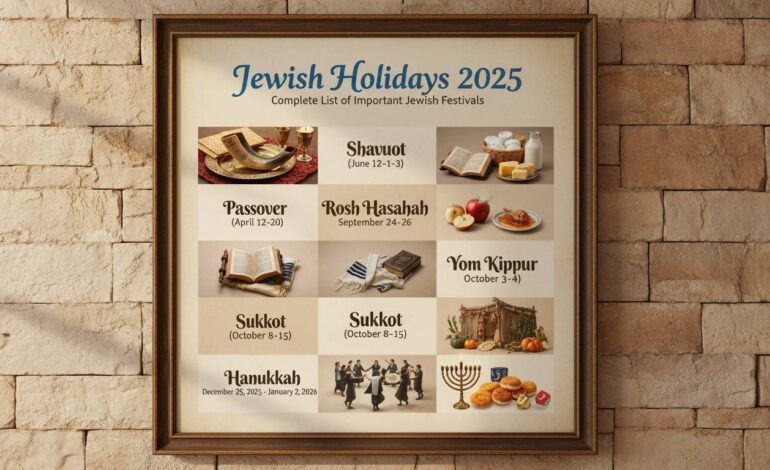
Here’s the full rundown, right off the bat: major Jewish holidays in 2025 fall at these Gregorian dates—Purim in mid‑March, Passover in mid‑April, Shavuot in early June, the High Holy Days (Rosh Hashanah, Yom Kippur, Sukkot, Simchat Torah) from late September into mid‑October, and Hanukkah in mid‑December. Below, you’ll get a clear, structured guide to each celebration—dates, meaning, customs—and occasional commentary that simply sounds human (because, well, that’s how we roll).
Overview of Holiday Timing
Fast of Tevet 10 / Asara B’Tevet
- January 10, 2025 (dawn to nightfall)
Commemorates the siege of Jerusalem—marked by fasting and reflection. Work is permitted.
Tu BiShvat (New Year for Trees)
- Begins sunset February 12, ends nightfall February 13, 2025
Also known as the “birthday of the trees,” it’s a minor but meaningful festival around nature.
Carnival‑Style and Spring Celebrations
Purim
- Begins sunset March 13, ends nightfall March 14, 2025
Joyful reliving of Esther’s courage—costumes, charity, reading of the Megillah.
Shushan Purim: March 15 in walled cities like Jerusalem.
Passover (Pesach)
- Begins sunset April 12, ends nightfall April 20, 2025
Marking the Exodus from Egypt. Notable observances include Seder meals, unleavened bread, no work on opening and closing days.
Second Passover (Pesach Sheni)
- May 12, 2025
A second chance for those unable to celebrate Passover on time. Simple, but thoughtful.
Lag B’Omer
- May 16, 2025
Celebrated with bonfires and communal festivities to mark unity and tradition. Work is permitted.
Summer Festivals and Memorials
Shavuot (Feast of Weeks)
- Begins sunset June 1, ends nightfall June 3, 2025
Honors the giving of the Torah at Sinai. Includes all-night learning and dairy foods. Work not permitted.
The Three Weeks (Period of Mourning)
- July 13 – August 3, 2025
Includes two fasts: - Fast of the 17th of Tammuz – July 13
- Tisha B’Av – August 2–3
Somber reflection on historical tragedies.
Work generally permitted during these weeks.
Tu B’Av
- August 9, 2025
One of the happier days—days of celebration and unity.
High Holy Days & Autumn Festivals
Rosh Hashanah (Jewish New Year)
- Begins sunset September 22, ends nightfall September 24, 2025
A time of self‑reflection, prayer, shofar‑blowing, and apples with honey.
Fast of Gedaliah
- September 25, 2025 (dawn to dusk)
Mourning the assassination of Gedaliah, marking a tragic moment in Jewish history.
Yom Kippur (Day of Atonement)
- Begins sunset October 1, ends nightfall October 2, 2025
The holiest and most moving day: fasting, prayer, and repentance.
Sukkot (Feast of Booths)
- Begins sunset October 6, ends nightfall October 13, 2025
Families build sukkahs, wave the Four Kinds. Joy reigns. Work restricted on major days.
Shemini Atzeret & Simchat Torah
- Begins sunset October 13, ends nightfall October 15, 2025
A brief pause followed by jubilant Torah dancing. Yizkor prayer on Shemini Atzeret.
Winter Festival of Lights
Hanukkah
- Begins sunset December 14, ends nightfall December 22, 2025
Eight nights of menorah lighting, fried treats, and celebration. Work usually allowed.
Fast of Tevet 10
- December 30, 2025
A quiet fast marking historical hardship. Work is permitted.
Israeli National & Community Observances (Diaspora Inclusion)
Some nationally significant days, particularly for Israeli Jewry, are also noted and increasingly observed in communities abroad.
- Yom HaShoah (Holocaust Remembrance Day): April 23–24, 2025
- Yom HaZikaron (Memorial Day for Fallen Soldiers): April 30, 2025
- Yom HaAtzmaut (Israeli Independence Day): May 1, 2025
- Yom Yerushalayim (Jerusalem Day): May 26, 2025
- Herzl Day: May 8, 2025
- Sigd: November 19–20, 2025 (Ethiopian Jewish holiday)
Summary Table: 2025 Jewish Holidays at a Glance
| Holiday | Gregorian Date(s) | Notes |
|———————————-|————————————|——————————————-|
| Fast of Tevet 10 | Jan 10 | Fasting day |
| Tu BiShvat | Feb 12–13 | Celebrates trees |
| Purim | Mar 13–14 (Shushan Purim Mar 15) | Costume, charity, reading Esther |
| Passover | Apr 12–20 | Exodus, Seder, unleavened bread |
| Second Passover | May 12 | Alternative observance |
| Lag B’Omer | May 16 | Bonfires, joy |
| Shavuot | Jun 1–3 | Torah, dairy, learning |
| Three Weeks & Fast Days | Jul 13–Aug 3 (Fasts Jul 13 & Aug 2–3) | Mourning period |
| Tu B’Av | Aug 9 | Festive day |
| Rosh Hashanah | Sep 22–24 | New Year, shofar, apples and honey |
| Fast of Gedaliah | Sep 25 | Mourning fast |
| Yom Kippur | Oct 1–2 | Atonement, fasting, prayer |
| Sukkot | Oct 6–13 | Booth dwelling, Four Kinds, joy |
| Shemini Atzeret / Simchat Torah | Oct 13–15 | Torah celebration |
| Yom HaShoah / HaZikaron / HaAtzmaut / Others | Apr–May | Israeli national days (commemorative and celebratory) |
| Sigd | Nov 19–20 | Ethiopian Jewish observance |
| Hanukkah | Dec 14–22 | Festival of Lights, menorah |
| Fast of Tevet 10 | Dec 30 | Quiet observance |
“These festivals reflect centuries of shared memory and evolving tradition. Observing them connects us to our past—celebratory or solemn—and reminds us community matters.”
— Jewish cultural educator
Why This Year Feels Rich
-
Balanced rhythm: Spring bursting with life (Passover, Purim), summer with both joy and reflection (Lag B’Omer, Shavuot, fasts), autumn soaring with spiritual weight (High Holy Days), plus a cozy winter light (Hanukkah).
-
Diverse observance: National days like Yom HaAtzmaut sit alongside diaspora traditions, making 2025 particularly rhythm-filled.
-
Safety & community: Reporting shows synagogues are attentive to security during major holidays. Despite concerns, communal bonds hold strong.
Concluding Takeaways
Here’s the bottom line—2025 unfolds in a rich chronological tapestry: from February’s quiet tree‑blessing to March’s masked merriment, April’s liberation stories, early summer’s Torah celebrations, midsummer’s mourning and renewal, autumn’s big spiritual arcs, and winter’s festival of light and unity. These holidays are more than dates—they’re living markers of identity, resilience, and togetherness.
FAQs
1. Do Jewish holidays always begin the evening before the date?
Yes. Most Jewish holidays begin at sunset the day before and run until nightfall on the listed date. This isn’t the case for some fast days like Fast of Tevet 10.
2. Can holidays like Passover and Sukkot have different rules in Israel?
Yes. In Israel, holidays often last one day shorter, affecting when work is permitted. The dates listed here are for the Diaspora (outside Israel).
3. Which holidays are the most important in 2025?
High Holy Days—Rosh Hashanah, Yom Kippur, Sukkot—hold the most religious weight. Purim and Passover are also widely celebrated for their cultural significance.
4. What is the quietest holiday in terms of observance?
Second Passover (Pesach Sheni) is observed by those who missed Passover and is generally low-key. Fast of Tevet 10 is also modest and personal.
5. Are Israeli national holidays observed in the U.S.?
They’re increasingly recognized in diaspora communities. Celebrations like Yom HaAtzmaut or Jerusalem Day are growing in prominence.
6. How reliable are these dates?
They’re based on established Hebrew-to-Gregorian calendar conversions. Minor community variations may exist, so local authority (like Chabad or a synagogue) is a good reference.