Impact Driver vs Drill: Key Differences, Uses, and Which to Choose

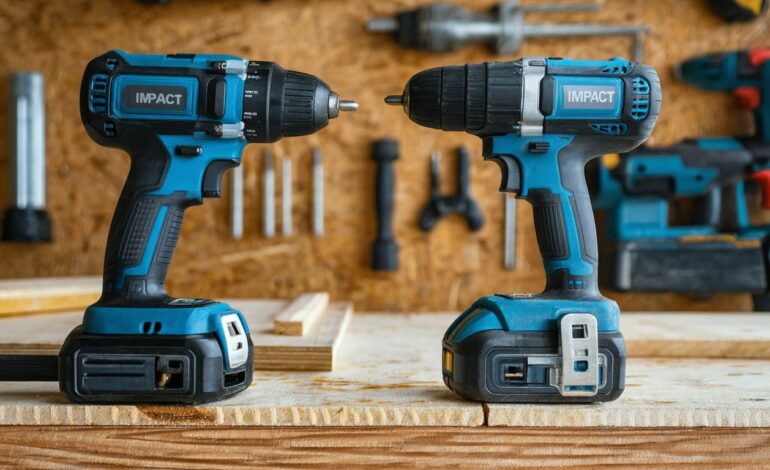
Selecting the right power tool for home improvement or professional projects can shape outcomes as much as the materials themselves. Among the most pivotal choices is understanding the nuances between an impact driver and a drill. Though their silhouettes appear similar and both are indispensable in any toolkit, their underlying mechanics and best-use cases diverge in crucial ways. Growing DIY trends, the evolution of cordless technology, and the expanding market of smart tools have fueled deeper consumer interest in this debate.
Understanding the Core Mechanisms
How a Drill Works
The cordless drill, a staple of the modern toolbox, employs a simple yet adaptable mechanism: a rotatory chuck holds various bits, spinning at variable speeds. This rotational action, enhanced by variable torque and clutch adjustments, makes the drill ideal for boring holes in materials such as wood, plastic, and some metals. Its greatest strength lies in its versatility—drills handle an array of tasks, from setting screws to assembling flat-pack furniture.
How an Impact Driver Works
An impact driver builds on the rotational force of a drill by incorporating a percussive mechanism. It not only spins the bit but also delivers rapid, powerful bursts—or “impacts”—of torque. These short, striking bursts enable the tool to drive large fasteners or stubborn screws with less effort, even in dense materials. This innovation has reshaped how professionals and hobbyists approach demanding driving applications.
“An impact driver’s internal hammer-and-anvil mechanism allows for immense torque output, making it invaluable for heavy-duty fastening jobs where a standard drill might stall or strip screws,” notes Mark Peterson, a master carpenter and tool reviewer.
Key Differences Between Impact Drivers and Drills
Torque and Control
Drills generally provide lower torque, with adjustable speed and clutch settings to prevent overdriving screws. This fine-tuned control is essential when precision is needed, such as when installing delicate hardware or working with softer materials.
Impact drivers, in contrast, can generate several times the torque of a typical drill due to their impact mechanism. While this allows them to tackle longer screws and denser materials with ease, it can also make them overpowered for smaller screws or materials prone to splitting. Most modern impact drivers offer variable speed triggers, though they lack the detailed clutch settings typical on drills.
Bit Compatibility and Versatility
Drills accept a broad selection of round and hex-shank bits, making them truly multi-functional—useful for drilling holes in a range of surfaces, in addition to driving screws.
Impact drivers, engineered primarily for driving, only accept hex-shanked bits. The trade-off is reduced versatility for drilling activities but a marked increase in performance and bit retention under high torque.
Noise and User Fatigue
The percussive action of an impact driver results in significantly more noise compared to a drill’s quieter operation. Additionally, while the impacts are transmitted internally and reduce wrist strain compared to high-torque drilling, the vibration and noise may cause fatigue over extended sessions.
Drills, being less aggressive and quieter, are often the better choice for longer projects where operator comfort and reduced noise are priorities.
Typical Use Cases and Industry Trends
When to Choose a Drill
- Drilling precise holes in wood, plastic, masonry (with hammer drill variants), or light metals.
- Driving small to medium screws where control and a light touch are essential.
- As a general-purpose tool for DIYers, renters, or those needing an all-rounder for home tasks.
When to Opt for an Impact Driver
- Driving long screws or lag bolts into tough materials, like decking or framing timber.
- Removing difficult or rusted fasteners where high torque is needed.
- Heavy, repetitive fastening work typical on construction sites, deck builds, or renovations.
Real-World Example
On large-scale decking projects, impact drivers have become the tool of choice for professionals who might drive thousands of screws per project. Major brands have reported year-over-year sales growth for impact drivers outpacing traditional drills, particularly in the construction and remodeling sectors.
Limitations and Complementary Use
Despite their strengths, neither tool completely replaces the other. While impact drivers excel at high-torque applications, they are not ideal for precision drilling tasks. Conversely, a drill may struggle with large fasteners but is indispensable for fine work.
Many pros and serious DIYers opt for a combination kit, leveraging the best features of each:
- Use the drill for starter holes, pilot holes, and tasks requiring finesse.
- Switch to the impact driver for heavy-duty driving and time-saving efficiency.
Choosing the Right Tool for Your Needs
Factors to Consider
- Nature of Projects: If your tasks involve a mix of drilling and fastening in various materials, a drill is a safer bet. For intensive fastening or construction work, an impact driver may be the wiser investment.
- Frequency of Use: Occasional users may find a high-quality drill ample. Those tackling renovation or woodworking frequently tend to appreciate the speed and power of an impact driver.
- Budget and Battery Platform: Many brands offer combo kits—often a cost-effective way to build up your tool selection and ensure battery compatibility.
Brand and Model Differences
The past decade has seen virtually every major tool brand—from DeWalt and Makita to Milwaukee and Bosch—offer distinct advantages in motor technology, battery life, compact design, and bit systems. Some brands are now introducing hybrid tools that attempt to split the difference, though many users still prefer using tools specifically optimized for each purpose.
Conclusion: Weighing the Drill Against the Impact Driver
The choice between an impact driver and a drill ultimately hinges on your objectives and workflow. For all-purpose versatility and precise control, a drill delivers. For speed, power, and tough driving applications, the impact driver stands alone. In practice, many workshops and job sites find both indispensable. By understanding their nuanced benefits and limitations, you can invest in tools that will help projects unfold more smoothly and efficiently—whatever scale they take.
FAQs
What is the main difference between an impact driver and a drill?
The main difference is that a drill is designed for drilling holes and driving screws with precision and control, while an impact driver delivers higher torque with rapid impacts, making it ideal for heavy-duty fastening tasks.
Can an impact driver drill holes like a drill?
While impact drivers can drill holes using hex-shank drill bits, they generally lack the finesse and precision of a dedicated drill, especially for fine or large-diameter holes.
Which tool is better for beginners?
A cordless drill is typically better for beginners due to its versatility, user-friendly controls, and wide range of compatible accessories.
Do professional contractors use both tools?
Yes, many professionals use both tools, switching between them to match the needs of each task—drills for precise drilling and light screw driving, impact drivers for heavy fastening.
Are impact drivers louder than drills?
Impact drivers are generally louder due to their percussive action. This increased noise is a consideration for indoor or extended use.
Can one tool fully replace the other?
Neither tool completely replaces the other. For optimal efficiency and results, both a drill and an impact driver are recommended for most toolkits.