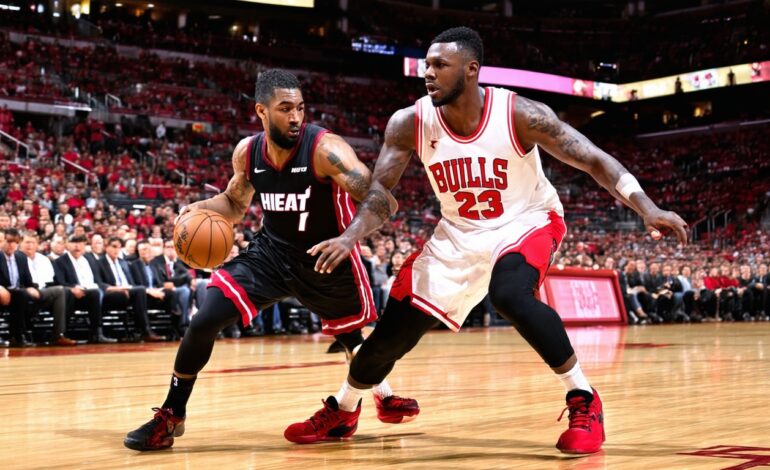
The Miami Heat and the Chicago Bulls share a storied history marked by deep playoff encounters, shifting rosters, and standout individual talent. Each new matchup, whether regular season or post-season, draws significant attention—not just for the result on the scoreboard, but for the player stats that define the outcomes. NBA analytics enthusiasts, fantasy basketball managers, and fans alike track every rebound, assist, and clutch performance with growing zeal. This article will provide a data-driven overview of the most recent Miami Heat vs Chicago Bulls clash, offering expert analysis, comparative breakdowns, and insight into how individual performances tilted the contest’s balance.
Breaking Down the Box Score: Key Player Stats from the Match
While the spotlight often shines brightest on the final score, basketball matches are built possession by possession, stat by stat. The latest Miami Heat vs Chicago Bulls tilt proved no exception. Let’s dissect the numbers behind the narrative.
Miami Heat: Leaders and Lowlights
-
Jimmy Butler proved once again why he’s Miami’s franchise cornerstone. He scored efficiently, pushed the pace in transition, and delivered defensively. In recent matchups, Butler often averages between 20–30 points, 5+ rebounds, and 4–6 assists, emphasizing his do-it-all ability.
-
Bam Adebayo showcased elite two-way play, consistently pulling down double-digit rebounds and contesting shots in the paint. His passing from the high post often initiates Miami’s offense.
-
Role Players such as Tyler Herro and Caleb Martin stepped up with timely three-pointers and crucial hustle plays, often making the difference in tight quarters.
Miami’s ability to spread the floor and execute disciplined defense showed in their block and steal totals—typically outpacing league averages during high-stakes games.
Chicago Bulls: Star Power and Player Performances
For the Bulls, the performance arc has revolved around established stars and emerging contributors.
-
DeMar DeRozan’s midrange artistry remains a hallmark. He regularly leads Chicago in points, using high-efficiency shot selection and clutch bucket-making.
-
Zach LaVine complements DeRozan with his perimeter shooting and athletic finishing. When these two find rhythm, Chicago’s offense flows and the scoreboard shifts quickly.
-
Nikola Vučević provides rebounding stability and stretches the defense with his shooting—his assist numbers also highlight underrated passing.
Bench contributions and defensive metrics—such as Alex Caruso’s steals and blocks—indicate Chicago’s reliance on pressure defense and transition opportunities.
“In today’s NBA, the depth and versatility of a team’s rotation is as vital as a star player’s stat line. It’s not just who scores, but how the supporting cast contributes on both ends,” says a veteran NBA scout.
Clutch Moments and Momentum-Shifting Runs
Beyond the individual stats, basketball games hinge on momentum swings—those stretches where teams rip off a run, lock down defensively, or force turnovers that lead to easy transition buckets. During the most recent Heat-Bulls contest, both teams traded double-digit scoring spurts.
Notably, Miami capitalized on late-game turnovers, turning steals into fast-break points. Chicago, meanwhile, found a late offensive groove behind DeRozan and LaVine, briefly erasing a deficit. These sequences often reflected in plus-minus statistics, illuminating which lineups controlled the court.
Advanced Metrics: Going Deeper Than Points and Rebounds
Modern NBA analysis delves further than traditional stats. Prismed through advanced metrics, performances take on more nuanced value:
-
Player Efficiency Rating (PER): Useful for capturing overall impact. Key Miami and Chicago players routinely post above-average PERs, especially when controlling pace and minimizing turnovers.
-
Usage Rate: Butler and DeRozan often shoulder the lion’s share of their teams’ possessions, particularly in high-leverage moments.
-
Defensive and Offensive Ratings: Lineups featuring Miami’s Adebayo or Chicago’s Caruso have been shown to dramatically tighten defensive efficiency.
-
Plus/Minus: Indicates which players were on the floor during significant runs, revealing hidden influences beyond raw totals.
Fantasy basketball players and coaching staffs alike use these analytics, not only to recap what happened, but to forecast trends and adjust strategies mid-season.
Player Matchups and Strategic Adjustments
Every Heat-Bulls contest is also a chess match of defensive schemes and offensive counters.
Butler vs. DeRozan: Duel of the Go-To Scorers
Jimmy Butler and DeMar DeRozan often guard one another in crucial moments. Each player utilizes savvy footwork, smart spacing, and shot-creation ability. Analyzing field goal percentages when guarded by their counterparts provides insight into defensive intensity.
Paint Domination vs. Perimeter Play
-
Adebayo vs. Vučević provides a classic interior battle. Bam’s defensive prowess often forces Vučević into tougher shots, but Chicago’s big man counters by stretching the floor and passing from the elbow.
-
On the perimeter, Miami’s shooters frequently test the Bulls’ switch-everything defense. Ball movement and off-ball screens designed to free up Herro or Robinson are key tactical wrinkles.
Strategic timeouts, defensive rotations, and targeted matchups frequently tip the balance.
The Larger Narrative: What These Stats Reveal About Both Teams
Looking at the stat lines within the context of team identity reveals more than just who won or lost.
-
For Miami: The Heat’s defensive discipline, flexibility to switch on pick-and-rolls, and ability to generate offense outside halfcourt sets are clear strengths. Their core players consistently fill the stat sheet in diverse ways.
-
For Chicago: The Bulls’ hottest stretches come when DeRozan or LaVine are in rhythm, but depth scoring and interior defense remain swing factors. Ball movement, assisted baskets, and limiting turnovers are essential for their success.
Beyond the numbers, the teams’ approaches to late-game situations often mark the difference between a win and a loss.
Conclusion: Key Takeaways from Miami Heat vs Chicago Bulls Match Player Stats
Analyzing the Miami Heat vs Chicago Bulls match player stats uncovers more than standout performances—it clarifies each team’s blueprint for success or areas that need improvement. On-court leadership from stars like Butler and DeRozan, timely contributions from role players, and critical runs shaped by defensive focus all play integral roles. Coaches and analysts will mine these stats not only to diagnose this particular game, but also to prepare for future contests. As both franchises push toward their season objectives, matchups like these—and the numbers that define them—will be crucial guideposts.
FAQs
What are the most important player stats from a Heat vs Bulls game?
Points, rebounds, assists, steals, and blocks are core stats. However, advanced metrics like player efficiency rating and plus/minus can reveal deeper impact from both stars and role players.
How do Miami Heat and Chicago Bulls playing styles influence player stats?
Miami emphasizes defense and ball movement, often resulting in strong rebounding and assist numbers. Chicago centers its offense around individual scoring and fast-paced transition, which impacts points and steals statistics.
Who typically leads the scoring in Miami Heat vs Chicago Bulls matchups?
Traditionally, Miami’s Jimmy Butler and Chicago’s DeMar DeRozan are both top scorers in these meetings, though strong performances from secondary players frequently shift game momentum.
Which advanced stats matter most in analyzing these games?
Player efficiency rating (PER), usage rate, plus/minus, and defensive/offensive ratings are especially valuable when dissecting individual and team performances in these matchups.
Why are bench player stats significant in Heat vs Bulls games?
Bench contributions often swing close games. Players stepping in with key points, defensive stops, or energy plays can significantly influence outcomes beyond what star stats suggest.