Finding a bra that fits perfectly is often overlooked, yet it is critical for both comfort and health. Poorly fitted bras contribute to everyday discomfort, back and shoulder pain, and can adversely impact posture. According to studies cited by the American Chiropractic Association, a significant share of women wear the wrong bra size, sometimes for years, often without realizing how much it affects their well-being and confidence.
Professional bra fittings have gained popularity in department stores and specialty shops, but self-measurement remains a vital skill—especially with the rise of online shopping. Understanding how to measure bra size at home can empower individuals to make better choices, drastically reducing the frustration of returns or ill-fitting underwear.
The Anatomy of Bra Size: Band and Cup
How Bra Sizes Work
Bra sizes in the U.S. typically consist of two core components: the band size (a number, like 34) and the cup size (a letter, like B or C). The band supports most of the breast weight, while the cup represents the volume of the bust.
It’s crucial to recognize that a 34B and a 36B do not fit the same: the band and cup interact. Sister sizing—a system where a different band and cup size yields a similar overall fit—is often confusing for buyers. Brands vary in sizing, so accurate self-assessment is a must.
Common Fit Issues
- Gapping or spillover at the cups often signals the wrong cup size.
- Straps digging in or slipping may indicate improper band size or poorly adjusted straps.
- Band riding up the back usually points to a band that’s too loose.
As lingerie expert Cora Harrington notes:
“A well-fitted bra should feel snug but not constricting on the loosest hook and parallel to the floor, with the underwire fully encasing your breast tissue.”
Step-by-Step Guide: How to Measure Bra Size at Home
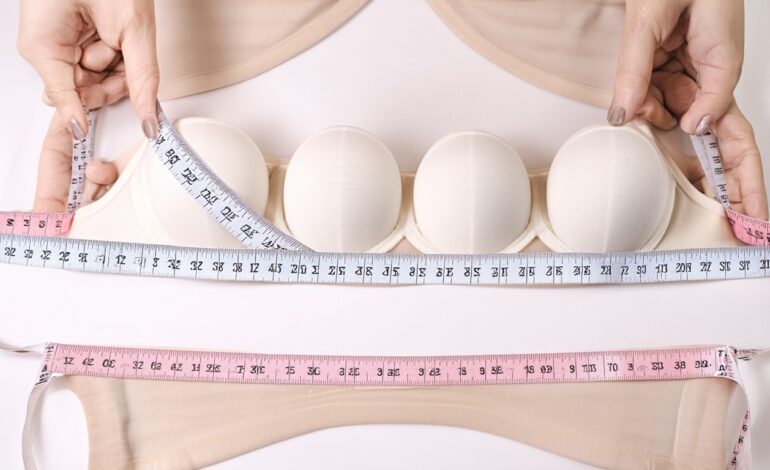
Accurate measurement is straightforward with just a soft measuring tape and a mirror. It’s best to measure while wearing a thin, unpadded bra or no bra at all. Here is a step-by-step process tailored for accuracy.
Step 1: Measure Your Band Size
- Wrap the tape snugly around your ribcage, directly under your bust.
- Ensure the tape is level, parallel to the ground, and not twisted.
- Note the measurement in inches. Round to the nearest whole number.
- If the result is an odd number, round up to the next even number, which is typically your band size.
Example:
If your underbust measures 31.5 inches, round up to 32.
Step 2: Measure Your Bust (Cup) Size
- Position the tape over the fullest part of your bust, keeping it level and comfortable.
- Breathe out gently to get your natural shape.
- Record the bust measurement in inches.
Example:
If your bust measures 36 inches, use this as your bust size.
Step 3: Calculate Your Cup Size
- Subtract the band measurement from the bust measurement:
Bust size – Band size = Cup size difference
- Use the difference to find your cup:
- 1 inch = A cup
- 2 inches = B cup
- 3 inches = C cup
- 4 inches = D cup
- 5 inches = DD/E cup
- Continue up the alphabet as needed.
Example Calculation:
- Band = 32 inches
- Bust = 36 inches
- Difference = 4 inches ⇒ D cup
- Your bra size: 32D
Step 4: Try On and Test
Numbers create a baseline, but the true test is how the bra feels and looks. When trying on bras:
- Straps should stay up without digging.
- Underwires should lie flat against your sternum.
- The band should feel snug but allow you to slip two fingers underneath.
- Cups should contain all breast tissue without gaping or spillage.
Beyond Numbers: Adjusting for Brand Variations
Even with a precise measurement, fit may differ between brands or styles due to manufacturing standards, materials, and design. Many brands now provide searchable fit guides or virtual fitting sessions to mitigate these disparities. For online shoppers, understanding return policies and customer reviews helps refine the selection further.
Sister Sizing and Its Role
If your measured size isn’t available, sister sizing offers a workaround. For example, if a 34C feels too tight in the band but the cup fits, try a 36B—the cup volume is similar, but the band is looser.
Real-World Example: Navigating Online Shopping
Consider the case of Mia, who frequently bought bras online only to return them due to discomfort. Frustrated, she learned to measure her band and bust properly and armed herself with her true size and two sister sizes. Reviewing brand-specific sizing charts and user feedback, Mia’s rate of successful online purchases jumped dramatically.
Industry specialists agree that this knowledge empowers consumers:
“Understanding your true size—and your sister sizes—enables you to shop more confidently and avoid the disappointment of poor fit, especially when shopping new or international brands.”
The Impact of an Accurate Fit on Everyday Life
Achieving the right fit is not just about comfort—it’s closely tied to posture, confidence, and long-term musculoskeletal health. Experts report that chronic shoulder and back pain can sometimes be mitigated with proper bra support, a benefit often overlooked when sizing is misjudged.
Moreover, the emotional boost associated with a comfortable, supportive bra should not be underestimated. Many individuals find increased confidence in professional, social, and athletic settings with a fit they trust.
Conclusion: Prioritizing Fit for Comfort and Health
The process of measuring bra size at home is straightforward, yet powerful in its outcomes. An accurate measurement transforms the experience of shopping for bras, whether in-store or online, resulting in improved comfort, reduced pain, and a welcome boost in confidence. With a foundational understanding of band and cup measurement—and some practical flexibility for brand fit differences—consumers can take control of their comfort and wellbeing.
FAQs
How often should I measure my bra size?
Check your measurements every 6 to 12 months, or if you experience significant weight fluctuation, pregnancy, or hormonal changes.
Can bra size change over time?
Yes. Weight changes, aging, pregnancy, nursing, and hormonal shifts can all affect your bust and band measurements.
What is ‘sister sizing’ and how does it help?
Sister sizing refers to different size combinations with similar cup volume but varying band/cup proportions, helping you find a better fit if your primary size isn’t available.
How do I know if my bra truly fits?
A correctly fitted bra will have a level band, no cup gaping or spillage, stable straps, and underwires that sit flat against your chest.
Are store-bought fittings better than home measurements?
Both methods are helpful; however, store fittings provide expert guidance, while home measurements offer convenience and a good starting point. A combination of both often yields the best results.
Is it normal to have a different bra size in different brands?
Absolutely. Variations in manufacturing and style mean sizes can differ between brands, so always consult their fit guides and reviews.