929 Area Code: Location, Coverage Map, and Phone Number Lookup Guide

929 Area Code: Location, Coverage Map, and Phone Number Lookup Guide
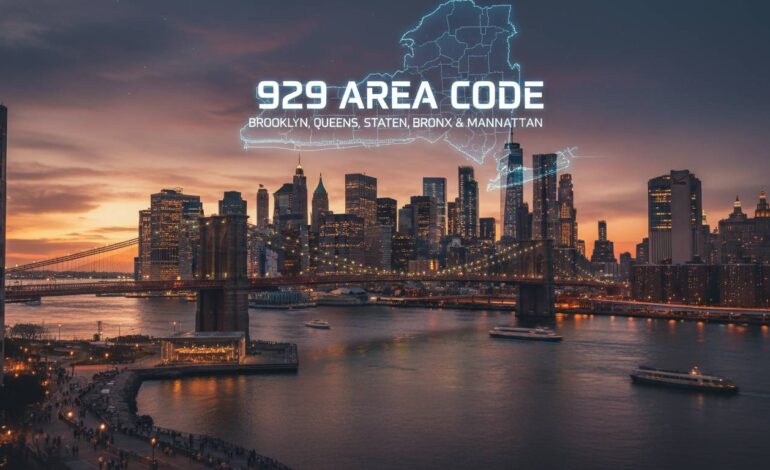
The 929 area code covers New York City’s outer boroughs—Brooklyn, Queens, the Bronx, Staten Island, and even Marble Hill in Manhattan. It’s part of an overlay plan, introduced in 2011, that shares the same geographic zone as 718, 347, and 917—allowing seamless expansion without changing existing numbers.
Geographic Reach and Overlay Context
The Outer Boroughs in Focus
This code serves the non‑Manhattan boroughs—Brooklyn, Queens, the Bronx, Staten Island—and Marble Hill, a quirky Manhattan slice that’s connected to the Bronx’s telecom grid.
Overlaying those earlier codes made it easier to manage growing demand—without reorganizing who owes what number.
Born for Expansion
The creation of 929 wasn’t to replace anything. Instead, it was a neat solution to give more numbers out in the fastest‑growing telecom market of its time. Voice lines, mobile phones, VoIP services—all gobbling up digits. The overlay method meant no one lost their number, dialing stayed consistent.
History in a Nutshell
Telephone Number Evolution
- 1947: Entire NYC had area code 212.
- 1984: 718 split off for outer boroughs.
- 1992: 917 added as a city‑wide overlay for mobile use.
- 1999: 347 brought in as the first overlay for 718.
- 2011: The 929 overlay activated April 16, 2011.
Managing Exhaustion
As demand surged from wireless devices, businesses, and startups, the city kept layering area codes. 929 helped delay running out of numbers—but regulators are already planning the next overlay, area code 465, expected June 18, 2026.
Coverage & Numbers in Practice
Cities and Counts
Area code 929 touches 28 cities across five counties, including New York City proper, White Plains, Garden City, Inwood, and Bronx. The population served across 929 and its overlays is in the tens of millions—NYC alone accounts for the vast majority.
Prefix Types & Activity
Out of all 929 prefixes, over half are assigned—split between landline and wireless, with more for mobile. A sizable chunk remains inactive, ready for activation.
Time Zone & Dialing
The entire region is in Eastern Time, observing daylight saving. Dialing requires ten digits, even for local calls: dial the area code plus the number—or 1 + 10 digits for long distance.
Scam Risk & Caller ID Spoofing
Legitimate but Spoofed
Although 929 is fully legitimate, it’s often used in caller ID spoofing by scammers. Fraudsters exploit the “local” feel to get people to answer.
Real‑Life User Warnings
Residents report getting repeated scam calls from 929 numbers—junk messages, health ads, mortgage pitches. Often they come from different numbers, so blocking one doesn’t help much.
Why 929 Attracts Scammers
It’s modern, neutral, and widely used for VoIP and cloud systems—making it easy pickings for fraudsters. It doesn’t carry the prestige of 212, but it has the flexibility scammers love.
Lookup Tips & Practical User Advice
Using Lookup Services
Websites like National Phone Number Registry offer reverse lookup for 929 numbers. You can often see the prefix, provider, and type of line.
What to Watch For
If you’re unsure about a caller, look up the number’s prefix or provider. Spoofing is common. Legit providers include Metro PCS, Onvoy, Cablevision Lightpath, and Verizon Wireless—if you spot unfamiliar names, be wary.
Overlay Landscape in NYC
Here’s how overlays stack in NYC:
| Year | Area Code | Notes |
|——|———–|——-|
| 1947 | 212 | Original NYC coverage |
| 1984 | 718 | Split for outer boroughs |
| 1992 | 917 | City‑wide mobile overlay |
| 1999 | 347 | Overlay on 718 territory |
| 2011 | 929 | Overlay for 718/347 |
| 2026 | 465 | Future overlay planned |
This layering keeps things smooth while boosting numbering capacity.
Real‑World Uses & Business Impacts
Evolving Business Needs
With startups and remote offices booming, having a 929 number gives instant local credibility. It fits right into modern telecom—especially VoIP and cloud setups.
Urban Growth Meets Telecom
NYC’s economic expansion—film and media hubs, logistics, healthcare systems, tech corridors—means constant demand for new lines. 929 answered that call, literally.
“Overlay area codes like 929 reflect how telecom is adapting to rapid urban growth and mobile demand—giving flexibility without disruption.”
Conclusion
929 is a pragmatic overlay area code for NYC’s outer boroughs, introduced in 2011 to tackle number exhaustion. It overlays with 718, 347, and 917, and dialing is always ten digits. Legitimate and widely used, yet frequently exploited by scammers. Number lookup tools can help assess unknown numbers. With area code 465 set to launch in mid‑2026, the city’s numbering plan is steadily evolving.
FAQs
What boroughs does the 929 area code serve?
It covers Brooklyn, Queens, the Bronx, Staten Island, and Marble Hill in Manhattan—all within New York City’s outer region.
When was 929 activated and why?
It was introduced on April 16, 2011, to add more phone numbers without disrupting existing ones—a simple overlay solution.
Do I need to dial 10 digits for local calls?
Yes. All calls within the overlay area require 10‑digit dialing, and 1 + 10 digits for long-distance even if it’s “local.”
Is a 929 call likely a scam?
Not necessarily—but it’s often used for spoofed or spam calls. Always verify unknown numbers using carrier lookup tools or reverse lookup services.
What overlay codes share with 929?
929 overlays with 718, 347, and 917. A future overlay, 465, is planned for June 18, 2026.
How can I look up a 929 caller?
Use a reverse lookup site to check phone number details, including prefix ownership and service type. That helps you spot suspicious or unknown callers.