919 Area Code: Location, Cities, Map & Phone Number Guide

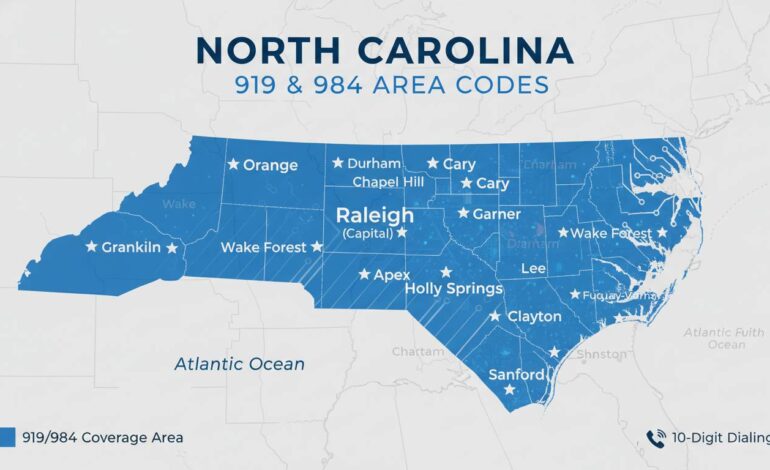
The 919 area code covers central and eastern North Carolina, mainly including Raleigh, Durham, Chapel Hill, and surrounding counties. It’s rooted in the Research Triangle region and remains one of the fastest-growing and most dynamic dialing zones in the state.
What the 919 Area Code Encompasses
Explains where the 919 area code applies and some geography around it.
Core Cities and Counties Covered
This area code includes:
- Raleigh, the state capital and a major tech and culture hub.
- Durham, with its strong university and healthcare presence.
- Chapel Hill, home to UNC-Chapel Hill and a rich academic scene.
- Nearby towns like Cary, Apex, and Hillsborough round out the primary service zone.
Beyond these, parts of Johnston, Wake, Orange, and Durham counties fall under its reach. This region forms a well-connected triangle.
Map It Out
It’s easiest to see the 919 footprint on a map. The area spans a curved zone stretching from the north-central piedmont to the southeast of Raleigh. That growth makes the boundary irregular compared to more uniform codes elsewhere.
Why the 919 Area Code Matters
Looks at history, telecom details, and lifestyle relevance.
A Bit of History
In 1954, area code 919 was created when North Carolina split off the eastern half (2143–919) from the original 704. It had a ton of room to grow, thanks to the Research Triangle’s expansion and booming telecom infrastructure.
Overlay with 984
By the mid-2010s, demand soared. So, area code 984 was overlaid across the same region. This means new numbers might have either 919 or 984, even though they’re in the same locale. Because of that, 10-digit dialing (area code + local number) is now standard for local calls.
Why It Continues to Matter
This area code matters for several reasons:
- Noting the area code instantly identifies the Triangle area.
- Many businesses use 919 in branding, especially tech and healthcare sectors.
- Locals often associate it with prestige or “home base” status.
Digging Deeper: Real Examples and Telecom Details
Goes somewhat granular into how it affects residents, businesses, and how numbers get assigned today.
How Phone Numbers Get Assigned
Generally:
- Telecom providers get blocks of numbers from the North American Numbering Plan (NANP).
- They distribute them to mobile and landline customers as needed.
- One provider—say AT&T or Verizon—might get a mix of unassigned 919 or 984 blocks.
Since the overlay, there’s no way to predict whether a new number will be 919 or 984.
Everyday Impacts
For businesses, 919 can signal “local, trusted.” A marketing firm in Raleigh might use it to show they’re “from here.”
For consumers, dialing friends across town means you still add the area code—can feel odd at first, but it’s normal now.
Growth and Future Outlook
Numbers are still being assigned in volume. The overlay helps delay the need to split again or create a new area code. Growth in digital services, remote work, and new lines for IoT devices all drive higher demand—so the overlay keeps things flexible.
Quick Reference: 919 Area Code at a Glance
- Region: Central and eastern North Carolina (Raleigh, Durham, Chapel Hill)
- Counties: Wake, Durham, Orange, parts of Johnston, others
- Overlay: 984
- Dialing: 10-digit now standard
- Established: 1954 (split from original 704 area)
- Present day: Still holds prestige and strong local identity
Wrap-up
The 919 area code remains a solid part of North Carolina’s identity. It shows up everywhere—from business cards to mobile phones and local ads. The addition of 984 helped keep things running smoothly, and it became a part of how people think about numbers here. For anyone moving, working, or starting a business in the Triangle, recognizing 919 is basics, really.
If you need another section—like a deeper history, map image idea, number resources, or dialing rules—just say the word. I’m happy to expand or tweak further.