512 Area Code: Location, Coverage Map & Phone Number Guide

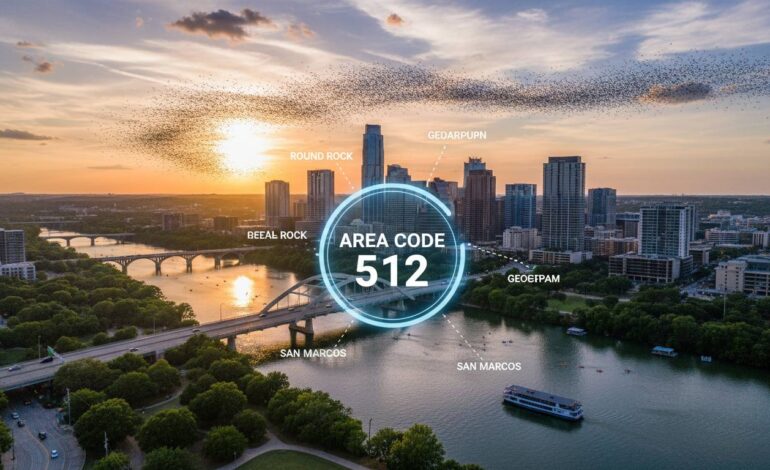
What Is the 512 Area Code and Where Is It?
512 is one of the original North American area codes, assigned in October 1947. Originally, it covered much of south-central Texas—from the Gulf Coast down to the Mexican border, including cities like Corpus Christi, San Antonio, and McAllen.
Over time, the code was trimmed. In 1992, the southwestern half—including San Antonio and the Rio Grande Valley—became area code 210. Then in 1999, the southern portion—including Corpus Christi—became area code 361.
To meet growing demand, an overlay area code—737—was introduced in July 2013. Since then, locals must dial ten digits (area code + number) for all calls within the region.
Coverage Map & Geographic Scope
Counties Served
The 512/737 overlay serves much of central Texas, covering at least 10–12 counties:
- Bastrop, Burnet, Caldwell, Hays, Milam, Travis, Williamson, plus Lampasas, Lee, Llano, and Guadalupe.
Key Cities and Towns
Major population centers within the 512 area code include:
- Austin (the largest city by far), Round Rock, Georgetown, San Marcos, Cedar Park, Leander, Kyle, Pflugerville, Lockhart, Taylor, Elgin, Bastrop, Buda, Burnet, and many smaller towns.
Population & Demographics Snapshot
- The combined population served by 512/737 is in the low millions—estimates suggest around 2.6 million.
- In just area code 512, prominent counties include Travis (pop. ~1.23M), Williamson (~547K), Hays (~213K), Bastrop (~85K), Burnet (~46K), and others.
- Major city populations: Austin with roughly 1.7 million; Georgetown, San Marcos, Kyle, Hutto, Taylor, and others span tens of thousands.
- The median age in this region is about 36, and ethnic diversity is notable: about 37% identify as Hispanic, nearly 7.8% as Black, and roughly 4.5% as Asian.
Overlay, Dialing Rules & Prefix Details
Why the Overlay?
By 2013, demand for numbers in the 512 region was high, so area code 737 was overlaid to expand capacity without splitting the region again.
Dialing Practices
- This overlay requires ten-digit dialing (area code + phone number) for all local calls.
- Permissive dialing began in late 2012; as of mid-2013, ten-digit dialing became mandatory.
Prefix & Carrier Insights
Prefix assignments range broadly—for example:
- Prefixes 512-200 and 512-202 are tied to T-Mobile and Verizon in Austin.
- 512-400 to 512-409 include providers like T-Mobile, SBC, Frontier, Brightspeed, etc., in locations like Buda, Bastrop, and San Marcos.
Historic Timeline at a Glance
| Year | Event |
|——|——-|
| 1947 | 512 established as an original area code, covering much of south-central Texas |
| 1992 | Split created area code 210—San Antonio and Valley moved out |
| 1999 | Split created area code 361—Corpus Christi and southern regions moved out |
| 2013 | Overlay area code 737 introduced; ten-digit dialing mandated |
Real-World Context & Uses
- Government and Tech Hub: Since Austin hosts many state agencies, keeping 512 made logistical sense—avoiding widespread number changes.
- Tech & Business Growth: Central Texas—especially Austin—has surged as a tech innovation hub. Big employers like Dell, IBM, AMD, and healthcare groups dominate the landscape.
- Dialing Behavior: Locals have adapted to ten-digit dialing and the overlay system without much disruption.
Benefits of Having a 512 Number
Businesses and residents enjoy key advantages:
- Local identity: A 512 number immediately signals central Texas presence.
- Continuity for institutions: Government, higher education, and long-standing organizations didn’t have to switch numbers after splits.
- Strong regional recognition, especially in tech and creative communities around Austin.
Looking Ahead
Currently, 512/737 isn’t facing number exhaustion—planning for additional area codes isn’t underway. This suggests the overlay model is working efficiently—for now.
Summary
The 512 area code stands as a staple of central Texas. Established in 1947, it’s evolved from a vast swath of south-central Texas to a more focused region centered on Austin. Splits in 1992 and 1999 narrowed its reach, while the 737 overlay in 2013 met rising demand. Today it serves over 10 counties and dozens of cities, including rapidly growing hubs like Round Rock and San Marcos. With tens of thousands of prefixes and deep economic ties to tech, government, and education, it remains both a functional necessity and a cultural marker.
FAQs
1. What cities does area code 512 cover?
It includes Austin, Round Rock, Georgetown, San Marcos, Cedar Park, Leander, Kyle, Pflugerville, Lockhart, Taylor, Elgin, Bastrop, Buda, Burnet, and many smaller towns and communities across central Texas.
2. When did area code 737 come into effect?
Area code 737 was introduced as an overlay of 512 in July 2013. Starting December 2012, ten-digit dialing was phased in and mandatory by mid-2013.
3. Why didn’t Austin lose 512 during area splits?
Regulators chose to let Austin keep 512 to avoid costly disruptions for government agencies using those numbers statewide. It was more practical than assigning a new code to the capital.
4. What counties are included in the 512 region?
Key counties include Travis, Williamson, Hays, Bastrop, Burnet, Caldwell, Milam, Lampasas, Llano, and Guadalupe.
5. Do I need to dial 10 digits in the 512 area?
Yes. Since the introduction of the 737 overlay, all local calls within the region require ten-digit dialing (area code + number).
6. Is the 512 area code going away soon?
No. There’s no current plan to retire 512 or add a new overlay—planners indicate the existing system adequately supports demand for now.