12 Grapes New Years Tradition: Meaning, Origin, and How to Celebrate

Origins of the 12 Grapes Tradition
The story goes that this quirky custom started in Madrid around 1909. A surplus of grapes that year led clever vendors to pitch the idea of eating one grape per chime at midnight. It caught on. From there, the tradition spread across Spain and later into Latin America.
This isn’t ancient folklore. It’s more like a clever marketing move that stuck. Still, it feels timeless—probably because it’s so simple to do, and it plays into a universal hope: a fresh start.
Over time, it gathered layers of meaning. Some link the grapes to blessings—health, prosperity, love—one for each month of the year. Others see it as a way to sync intention with time, bite by bite.
What the 12 Grapes Mean
Beyond just “eat grapes fast,” each grape stands for something—often one wish or goal for every month of the year. Think of them as little promises to yourself: better health, clearer thinking, more time with loved ones, whatever matters.
There’s also a social angle: pulling this off with a crowd—family, friends, neighbors—is part of what makes it memorable. You’re not just rushing grapes; you’re sharing a moment where everyone hopes for good fortune together. That camaraderie amplifies things. It’s not just superstition; it’s a shared ritual that binds people.
How to Celebrate the 12 Grapes (Simple Steps)
Step 1: Gather Your Grapes
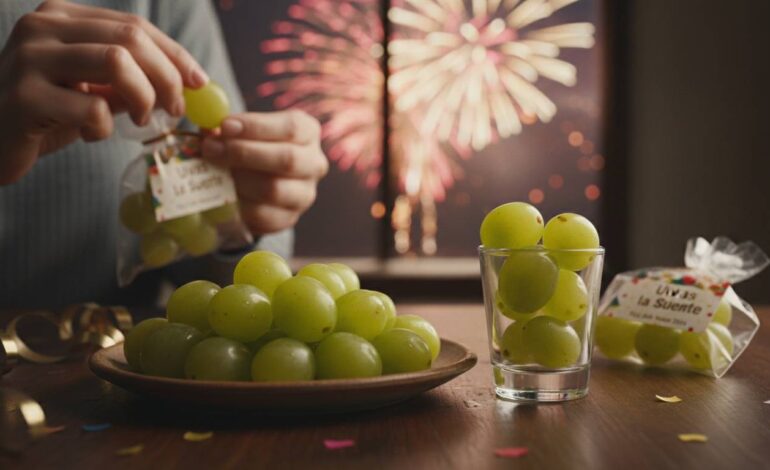
You’ll need 12 ripe grapes per person. Green or red, seedless is best—so you don’t choke. Pre-peeled or sliced grapes work too if you want less chaos at midnight.
Step 2: Set the Scene
As midnight approaches, gather near the TV broadcast of the clock (Spain’s national broadcast is a thing) or use your phone. Have grapes within reach—on a small plate, in little bowls—whatever works for your setup.
Step 3: Count the Chimes
As the clock chimes each hour, pop a grape. It helps to align it with the countdown—11, 10, 9, 8, 7… it’s oddly fun. Don’t worry if you lose pace; the charm is in the imperfect race.
Step 4: Nail the Last Grape
The final grape can be the trickiest—energy’s high, pace is frantic, and maybe you missed one. Just laugh it off, swallow, and make your wish for the year.
Spice It Up a Bit
You can make it personal. Write a little wish for each grape on post-its nearby. Or add a non-alcoholic sparkling drink for a fancy toast mid-race. Some families pair grapes with a sip of cava or apple cider. It’s all yours to tweak.
Why It Still Matters Today
A Social Ritual
We’re moving fast in modern life. Rituals that involve everyone—especially ones you can join in without prep—feel rare. The 12 grapes deliver that: a moment to pause, to laugh, to hope together.
Simple, Inclusive, Memorable
You don’t need much. No expensive props, no long setup. Anyone from toddlers to grandparents can take part. And rare that we’ve got a countdown activity that doesn’t involve fireworks or screens.
Mixing Tradition With Trends
In some places, digital grape apps exist—your phone dings each second, reminding you to “eat” a virtual grape. It’s kitschy, but a nod to how old ways adapt to new tech. Still, nothing beats the tactile grape-and-laughter experience.
“This tradition works because it’s intuitive and emotional. You’re mapping the passing of time to something you can hold—and eat. That changes how you feel about the new year’s first moments.”
Real‑World Examples
- In Spain’s Puerta del Sol in Madrid, thousands cram together, all racing against the chimes. It’s chaotic, loud, and utterly alive.
- In Latin American cities, families gather indoors, with older generations reminding younger ones, “Don’t forget grape number six!” The blend of levity and encouragement is heartwarming.
- Some expat communities throw New Year’s events with live Spanish broadcasts, grapes for everyone, and hints of Latin music—the tradition travels well when you bring culture and grapes in one bundle.
Pro Tips for a Smooth (and Fun) Midnight
- Rinse grapes early and pat them dry—no slipping at crunch time.
- Use extra food-safe toothpicks or skewers if swallowing scares you—easy removal before biting.
- Keep it light: one grape per chime, even if you’re off rhythm, counts.
- Record your countdown. Later, you’ll laugh at someone fumbling or a toddler missing the last grape entirely.
The Psychology and Symbolism Behind It
Eating 12 grapes at the turn of the year taps into a human need for symbolic acts. It gives structure to hope. Swallowing each grape becomes a mini‑commitment.
It’s small, yes—but meaningful. One grape, one micro‑goal for each month. That converts vague good wishes into something you actively take onboard, even if only symbolically.
Collectively, it turns nerves of “will the new year be better?” into the shared question of “how many grapes do we have left?” You channel doubt into playful action.
Context in Global New Year Traditions
It coexists with fireworks, fortune cookies, and New Year’s resolutions—but it’s unique. Unlike fireworks (costly, loud) or resolutions (often vague), this offers an immediate, tangible tradition that’s both playful and hopeful.
Comparison at a Glance
- Fireworks: flashy, communal, expensive
- Resolutions: abstract, individual, easy to forget
- 12 grapes: interactive, affordable, communal—plus edible payoff
Mistakes, Misfires, and Why They’re Charming
Maybe you chew two at once. Maybe your kid sprays juice everywhere. Maybe you miss the fourth chime entirely. Those quirks become stories—“Remember when grandma had four grapes left?” Those moments are what make the night memorable.
It’s okay if it’s messy. It’s better that way.
Quick Checklist Before Midnight
- 12 seedless grapes washed and ready
- A watch or broadcast for exact chimes
- Plates or bowls for organization
- Optional: wishes written on notes, festive drinks, video recording setup
Refreshing the Tradition for Today
- Add a photo booth with grape-themed props
- Use colored grapes, or freeze them in festive shapes
- Pair with themed playlists (“midnight grape tunes”)
- Combine with digital sharing—#12grapesNYE, share your countdown clips
Sustainability and Foodsafe Notes
Buying local grapes and reducing plastic packaging aligns with greener choices. Washing and drying grapes in advance avoids last-minute fuss—and safer food prep matters when you’re in a rush.
Concluding Summary
This 12 Grapes tradition is a charming blend of simplicity, togetherness, and symbolic hope. You eat grapes. You count. You laugh. You create shared memories that set a warm tone for the year ahead. No fuss, no big spending—just a stocking of grapes, shared intention, and a midnight moment. It’s small, but it sticks.
FAQs
Q: Why exactly 12 grapes?
A: Each grape represents a month of the incoming year. Eating them all is meant to ensure good luck for each month.
Q: Where did this tradition start?
A: It began in Madrid, around 1909, when grape growers promoted it to sell a surplus and it quickly caught on as a New Year custom.
Q: What if I can’t eat them in time?
A: Don’t stress. Laugh it off, grab the remaining grapes, and make your wishes. The fun’s in trying, not perfection.
Q: Can I do this with kids?
A: Absolutely. Just use seedless or sliced grapes. Make it playful—kids often love the countdown even more than the grapes.
Q: Any modern twists to try?
A: Sure—try grape-shaped ice cubes in drinks, digital timers with prompts, or small notes for each grape. Makes it fresh and fun.
Q: Does it work if we’re not Spanish?
A: Definitely. The ritual’s simplicity and energy make it easy—and charming—for anyone wanting a meaningful New Year moment.
Wrap up: Grab grapes, line up those intentions, and make midnight both meaningful and delightfully messy. Happy nibbling—and may your year be full of sweet moments.